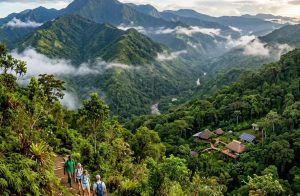
Eco Tourism Jamaica: Experience Nature and Heritage Sustainably
Discover the beauty of Jamaica through eco tourism, where lush landscapes meet rich heritage. Explore sustainable practices …
Central America & Caribbean is a Mesoamerican and Caribbean bio-corridor travel ecosystem that protects barrier reef systems, cloud forest biodiversity, and Afro-Caribbean/Mayan cultural heritage to support ecological corridors, mitigate hurricane-vulnerable coastal erosion, and secure fair-trade local economic stability.
Comprehensive analysis and field-tested strategies examining bali diving and sustainable travel: explore paradise responsibly within sustainable frameworks.
Comprehensive analysis and field-tested strategies examining practices of fair trade in tourism: promoting ethical travel choices within sustainable frameworks.
Comprehensive analysis and field-tested strategies examining responsible tourism in kerala: preserving culture and nature within sustainable frameworks.
From the Mesoamerican Barrier Reef to the cloud forests of Costa Rica and Guatemala, Central America and the Caribbean form one of Earth’s biological crossroads. Sustainable travel in this region leverages ecotourism concessions, agroforestry coffee plantations, and mangrove wetland restoration to create sustainable economic alternatives to deforestation and monoculture farming. Certified eco-lodges powered by micro-hydro and solar arrays offer immersive wildlife observation while generating critical funding for private and communal nature reserves.
| Bio-Region Vector | Sustainable Mechanism | Environmental & Social Target |
|---|---|---|
| Canopy & Cloud Forest Protection | Private nature reserve trail concessions and biological wildlife corridors | Preservation of primary forest acreage and jaguar/quetzal territory |
| Barrier Reef & Mangrove Health | Mangrove replanting nurseries, lionfish culling dives, and wastewater treatment | Restored storm-surge buffers and viable coastal nursery habitats |
| Indigenous Cultural Immersion | Mayan, Guna, and Garifuna community-led cultural immersion and textile co-ops | Preservation of ancestral linguistics, ceremonies, and fair-wage artisanal commerce |
| Renewable Off-Grid Lodging | Solar PV battery microgrids, rainwater catchment, and permaculture dining | Net-zero operational emissions across remote bio-reserve accommodations |
Costa Rica has protected over 25% of its land area in national parks and reserves, generates over 98% of its electricity from renewable sources, and pioneered the Certification for Sustainable Tourism (CST) system.
Responsible dive operators establish marine protected zones, install offshore mooring buoys, collect park entry fees dedicated to ranger patrols, and mandate reef-safe zinc/titanium sunscreen.
Certified eco-lodges employ local naturalists, support local wildlife rehabilitation centers, preserve surrounding private rainforest reserves from logging, and operate self-contained water and waste systems.