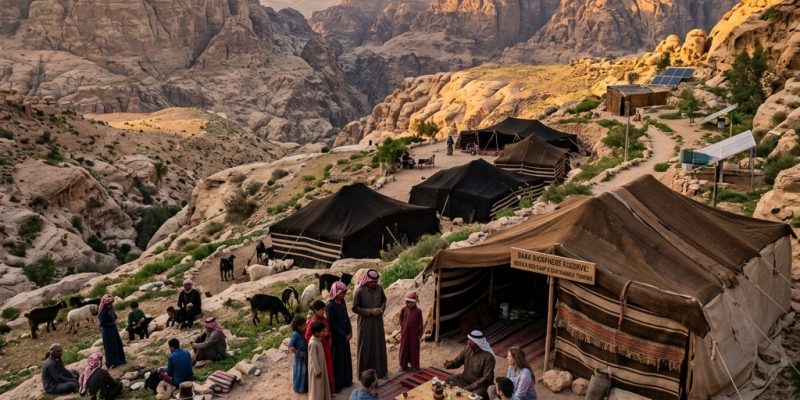
Local community tourism in Jordan is the most direct way to ensure your travel budget supports local families rather than international corporations. In this guide, we cover how to bypass agencies, book authentic Bedouin experiences, and make a measurable economic impact.
Quick Answer: How to Support Local Communities
To support local community tourism in Jordan, book directly with cooperatives like Safi Kitchen, Iraq Al Amir, or Beit Khayrat Souf. Stay at Feynan Ecolodge or use Wild Jordan (RSCN) and Baraka Destinations in Umm Qais to ensure 80%+ of your spending reaches local Bedouin families and rural workers.
Why Local Community Tourism Jordan Outperforms Resort Travel
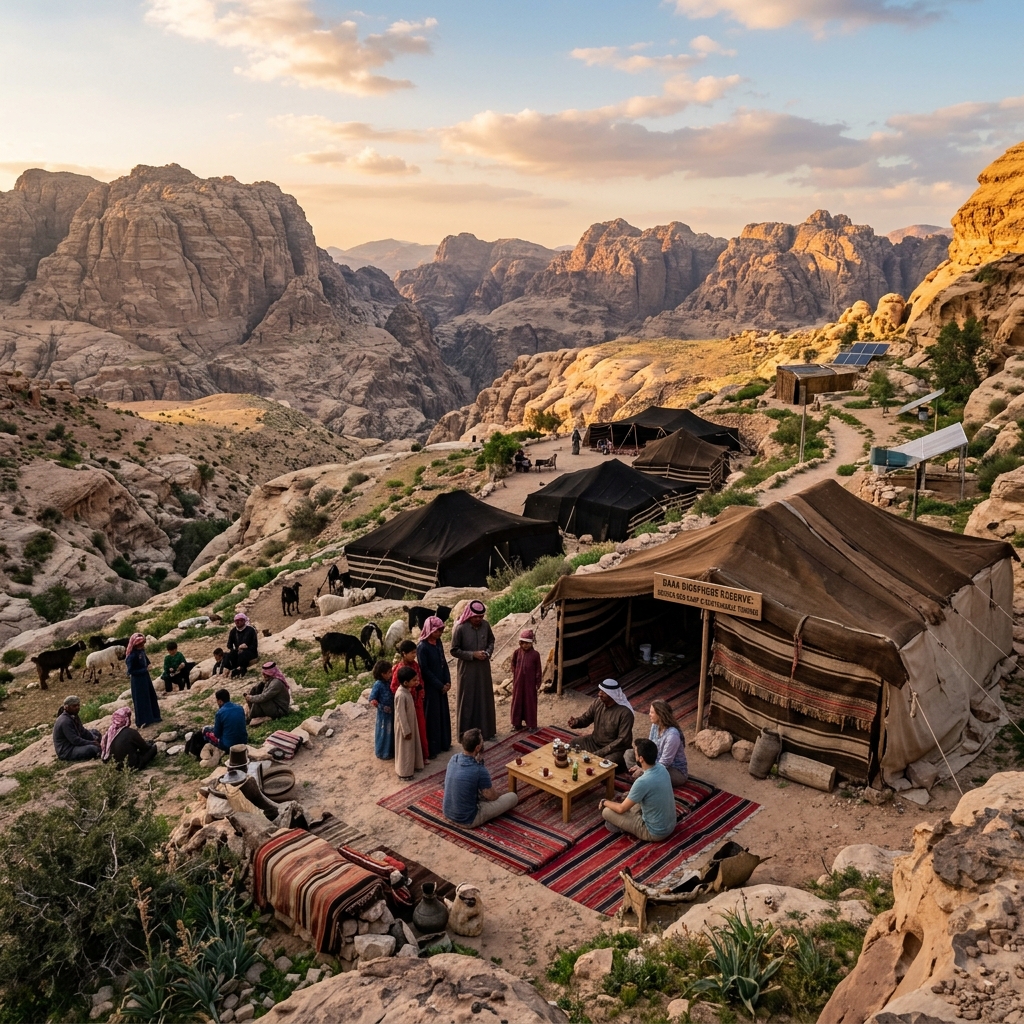
Unlike traditional resort tourism, where only a fraction of revenue stays in the country, community-based travel ensures direct trickle-down economics. When you hike The Jordan Trail or stay in the Dana Biosphere Reserve, rural families benefit directly.
According to local Bedouin guide Ali from Wadi Rum, “When travelers book directly with us, my entire extended family is supported for the month, funding school supplies, winter preparations, and livestock feed.” This direct economic impact is why grassroots initiatives are vital for the country’s rural regions.
How to Book Directly with Local Initiatives
To maximize your economic impact, skip third-party platforms. You can book eco-stays through Wild Jordan, managed by the RSCN (Royal Society for the Conservation of Nature), which channels profits into conservation and community programs.
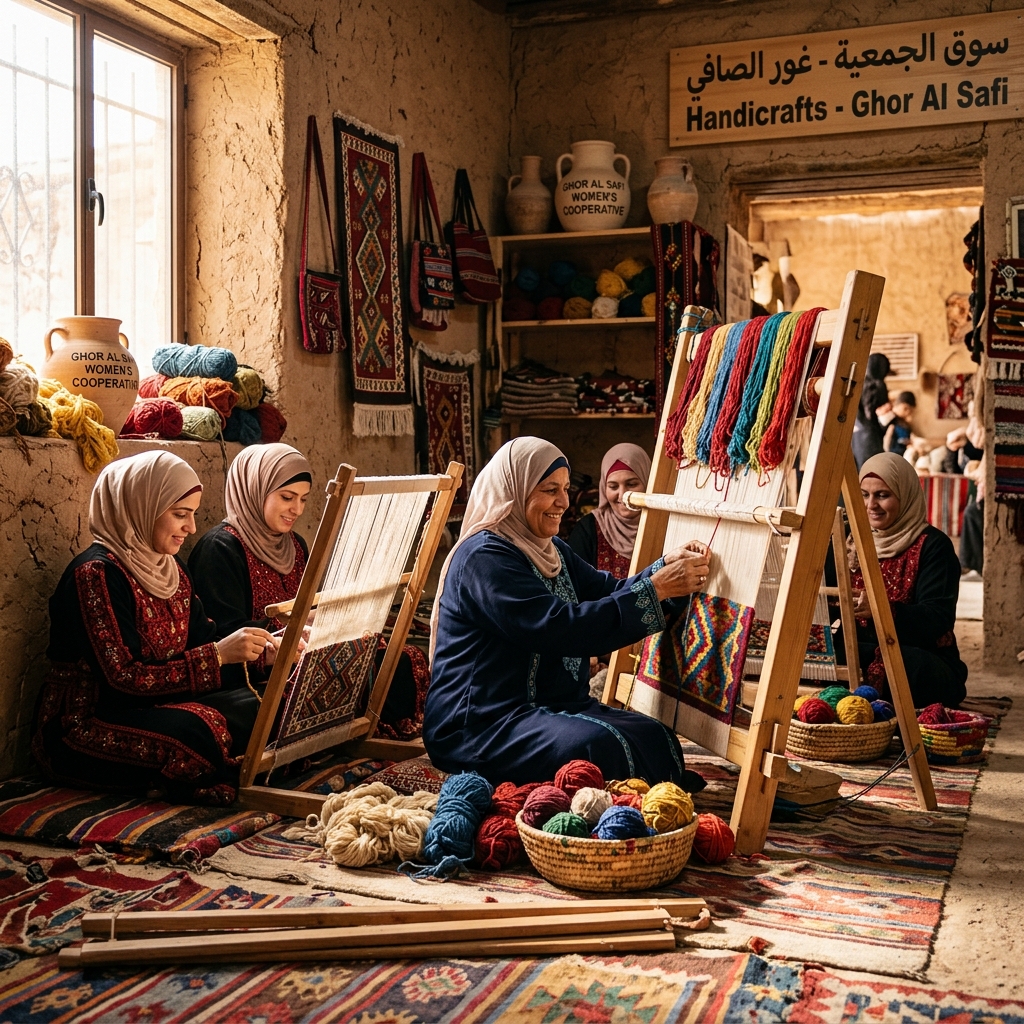
In the north, Baraka Destinations partners with locals in Umm Qais for beekeeping and foraging tours. In the south, you can visit Safi Kitchen & Safi Crafts (Ghor Al Safi) for culinary experiences, or the Iraq Al Amir Women’s Cooperative near Amman to purchase handmade paper and ceramics.
The Economic Reality: Resorts vs. Rural Cooperatives
Comparative analysis shows that all-inclusive resorts retain roughly 20% of revenue locally due to economic leakage. Conversely, spending at enterprises like Beit Khayrat Souf or the solar-powered Feynan Ecolodge retains over 80% of funds within the host community. This localized model empowers women, preserves heritage, and fuels sustainable development across Jordan.
Get our latest guides, news, and insights highlighted in your Google Search & AI Overviews.