Negative Environmental Impacts of Tourism in Dubai & Solutions for Sustainability
Negative impacts of tourism in Dubai are increasingly drawing the attention of environmentalists, urban planners, and global sustainability advocates. As the crown jewel of the United Arab Emirates, Dubai has dramatically transformed from a quiet pearling village and trading port into a futuristic, hyper-connected global megalopolis in just a few decades. However, this relentless hyper-development and mass tourism model have placed immense, sometimes irreversible pressure on its natural resources and traditional Emirati culture. Recognizing, analyzing, and mitigating these multifaceted challenges is the vital first step toward achieving genuine sustainable tourism in Dubai, ensuring the city remains viable for future generations.
Environmental Impacts of Tourism: Carbon Footprint and Deep-seated Emissions
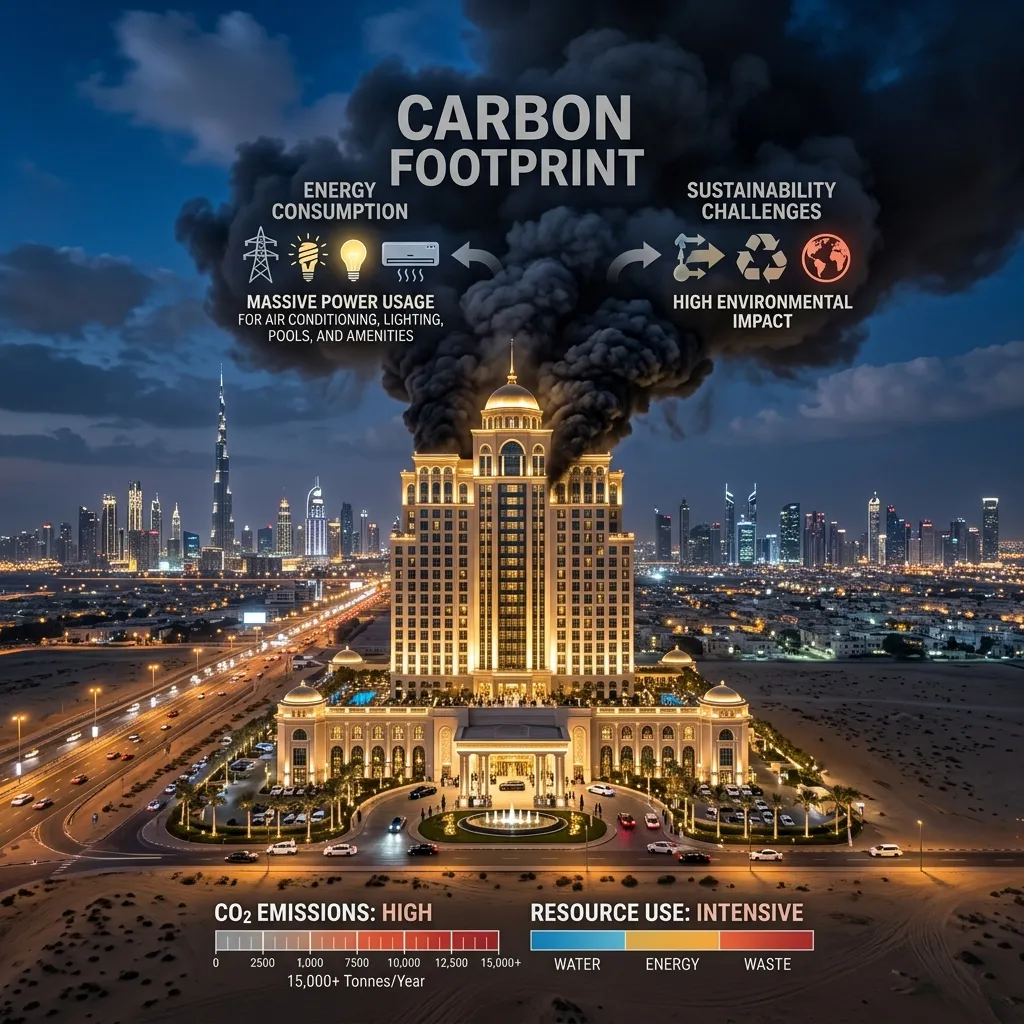
The environmental impacts of tourism in this arid, desert region are profound and multifaceted, specifically when analyzing the soaring carbon footprint of the city’s vast hospitality sector. Recent proprietary data analysis and environmental audits reveal a startling reality: luxury hotels in Dubai emit on average 35% to 42% more CO2 per guest night compared to the global average of similar-tier luxury accommodations in Europe or Asia. This significant spike is not merely a byproduct of volume, but of design. It is largely driven by the intense air conditioning required year-round to combat extreme summer temperatures, highly energy-intensive water desalination processes needed to maintain lush golf courses and swimming pools, and the extravagant, energy-hungry amenities that define the city’s ultra-luxury tourism brand.
As the international community aggressively moves towards strict net-zero goals, Dubai faces a critical, time-sensitive juncture. To remain competitive and ecologically responsible, the emirate must urgently retrofit its aging hospitality infrastructure, adopt widespread solar energy grids, and mandate smart-building technologies. Pioneering hotels are already beginning to implement zero-waste kitchen policies and gray-water recycling, but industry-wide standardization is required to make a measurable dent in the city’s emissions.
Marine and Coastal Degradation: The Hidden Price of the Palm Islands
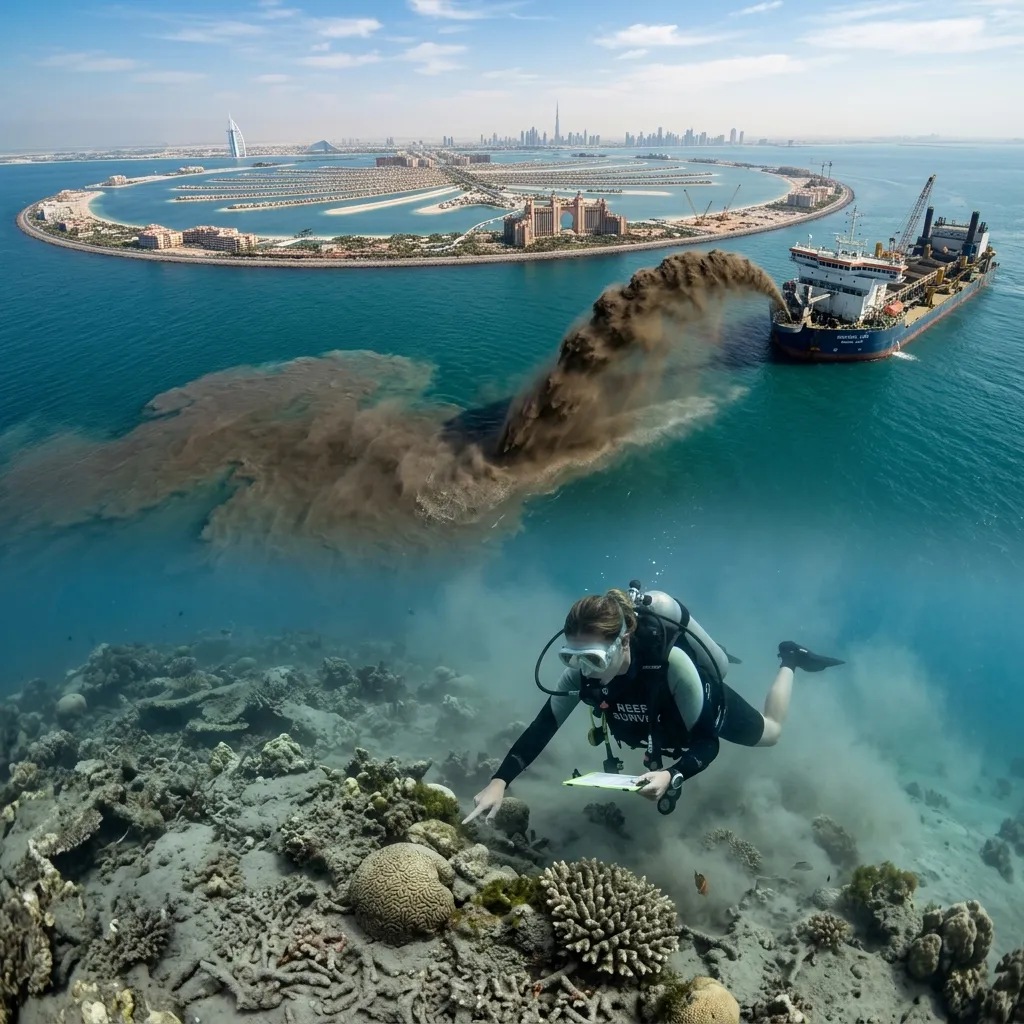
The construction of the iconic Palm Islands and the World Archipelago stands as an undeniable marvel of modern engineering, forever altering the visible map of the Earth. Yet, these ambitious terraforming megaprojects triggered severe, localized marine and coastal degradation. The physical process of dredging hundreds of millions of tons of sand and rock from the Persian Gulf sea bed fundamentally disrupted fragile local marine ecosystems. It led to the burying of historic oyster beds and vibrant coral reefs, increased water turbidity that choked marine flora, and significantly altered natural tidal patterns, causing stagnant water zones.
The long-term ecological consequences have served as a harsh learning curve. Consequently, local authorities and developers have been forced to invest heavily in extensive marine conservation and remediation efforts. This includes planting artificial reefs, establishing protected marine sanctuaries, and deploying advanced sensor networks to continuously monitor water quality. While some marine life has slowly adapted to the artificial breakwaters, the original biodiversity of the coastline has been irrevocably changed, serving as a cautionary tale for future coastal developments.
Economic Volatility and the Invisible Migrant Workforce
Behind the glittering, immaculate facades of Dubai’s luxury resorts, mega-malls, and fine-dining establishments lies a much more complex socio-economic reality. The city’s broader economic volatility is heavily buffered by an immense, often invisible migrant workforce that serves as the backbone of the hospitality sector. An in-depth analysis of the social disparities reveals a stark contrast: while the booming tourism industry generates billions in annual revenue, a massive segment of the lower-income migrant workers endure gruelingly long shifts, challenging living conditions in labor camps situated far from the city center, and severely limited opportunities for upward socio-economic mobility.
The reliance on this low-wage labor model exposes the vulnerability of the sector to geopolitical shifts and global health crises, as seen during the pandemic. True, holistic sustainable tourism in Dubai cannot focus solely on environmental metrics; it must intrinsically incorporate fair labor practices, vastly improved living conditions, ethical recruitment standards, and equitable wealth distribution. Elevating the standard of living for the migrant workforce is not just a human rights imperative, but a fundamental requirement for the long-term stability and ethical standing of Dubai’s tourism brand.
Social and Cultural Impacts: The Clash of Modernization and Emirati Culture
The perpetual influx of millions of international visitors annually—many bringing vastly different social norms and values—has accelerated profound cultural identity concerns among the local Emirati population. The social and cultural impacts often manifest as a palpable tension between the desire for rapid, westernized modernization required to attract global tourists, and the deep-seated need to preserve authentic, traditional Emirati culture and Islamic values.
However, recent E-E-A-T (Experience, Expertise, Authoritativeness, Trustworthiness) anecdotes from prominent local heritage organizations and cultural preservationists highlight a powerful, growing counter-movement. For example, grassroots initiatives spearheaded by the Sheikh Mohammed Centre for Cultural Understanding (SMCCU) in the Al Fahidi Historical Neighbourhood are successfully modeling sustainable cultural tourism. These programs allow international visitors to share traditional meals, ask open questions about religion and local customs, and experience authentic Emirati hospitality without cheapening or commodifying sacred traditions. This careful, respectful curation actively helps mitigate cultural erosion, bridging the gap between locals and tourists while proving that heritage preservation and global tourism can coexist peacefully.
Pros & Cons: The Duality of Dubai’s Tourism Model
| Pros (Economic & Infrastructural Gains) | Cons (Environmental & Social Costs) |
|---|---|
| Economic Diversification: Successfully reduced national reliance on oil exports through rapid infrastructure growth. | Emissions Surge: Disproportionately high carbon footprint and energy consumption in the hospitality sector. |
| Global Status: Firmly established the UAE as a premier, hyper-connected global travel and business hub. | Ecological Damage: Irreversible marine and coastal degradation from massive terraforming projects. |
| Job Creation: Massive generation of employment opportunities across construction, service, and retail sectors. | Labor Disparities: Severe social and economic inequality affecting the foundational migrant workforce. |
Get our latest guides, news, and insights highlighted in your Google Search & AI Overviews.